The 100-Day M&A Metamorphosis
Transforming Your Acquisition

Did you know that approximately 70-90% of mergers and acquisitions fail to achieve their intended goals? Despite the allure of synergies and growth opportunities, navigating the complex terrain of M&A transactions, particularly for small to mid-sized businesses, can be fraught with challenges.
Success lies in meticulous planning, strategic execution, and adept management, especially in the critical first 100 days post-transaction. This crucial period is often referred to as the "integration window," and for good reason. It's a time for establishing a solid foundation, fostering positive relationships, and laying the groundwork for a seamless blend of two companies or the cornerstone for a new beginning. By strategically navigating these first 100 days, SMB acquirers can significantly increase their chances of M&A success.
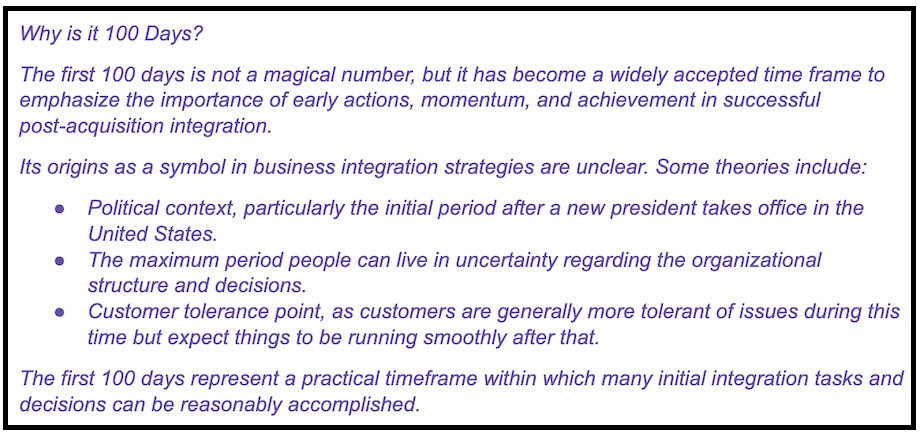 The actions taken in the first 100 days of an acquisition will have a huge impact on the overall value created in the deal. Therefore, it is critical that every detail is managed during this time sensitive period to ensure success. It is a time of anxiety and uncertainty for the buyer and target alike. It is also a time of change and allows the new owner to create the right first impression, capture synergies (if applicable), maximize deal value and establish the future direction of the business.
Planning is Paramount: The Pre-Closing Powerhouse
The groundwork for a successful M&A transaction begins long before the ink dries on the deal documents. Buyers must conduct comprehensive due diligence to unearth potential risks, identify synergies, and develop a robust integration strategy. This entails evaluating the target company's financial health, operational capabilities, cultural alignment, and legal compliance and can be broken down as follows:
The 100-day plan needs to include the following key components:
- An Integration Team: Build a dedicated team with representatives from both companies, leveraging the strengths of each. This team will spearhead the integration process and be the central point of communication.
- Communication Plan: Open and transparent communication with employees from both companies is vital. Address potential anxieties, outline clear expectations, and foster a collaborative environment.
- Day One Actions: Don't wait until closing day to start laying the groundwork. Develop preliminary communication plans, identify key contacts in the target company, and prepare for a smooth handover of operations.
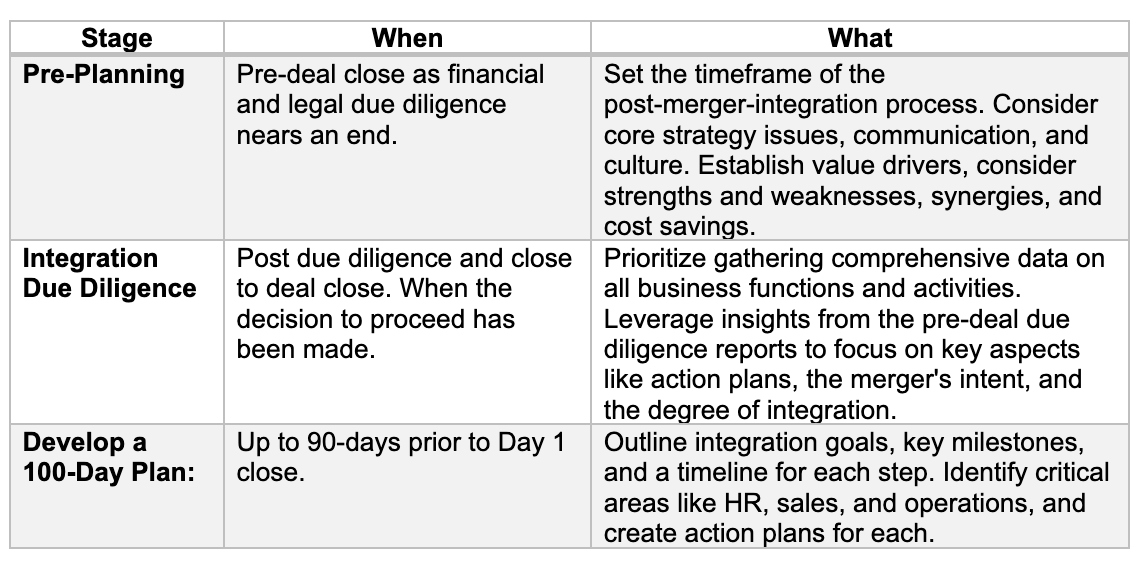
By investing time and resources in pre-closing planning, buyers can mitigate uncertainties and lay the foundation for a seamless transition.
First Impressions Matter: The Day of Reckoning
Closing day is a momentous occasion, but that is when the real work begins. This is the time that the integration team is launched, progress begins to be measured and monitored, synergies start to be captured, and cost-saving activities are realized. Remember to stay flexible as an acquirer may need to course correct to achieve their goals. Here is how to ensure a smooth transition closing day.
Communication
Good communication is the way to build trust, motivate, and share important information. A well planned and executed communication plan enables managers to lead the M&A integration project more effectively. It can prevent the negative impact of rumors and help unify the company. Day one communication activities should include the following:
- Welcome Letter/Message: Immediately after closing, a welcome letter or email should be sent to all employees of the acquired entity. It should include welcoming words from new leadership, identification of changes in business unit leads (those leaving and those staying), new locations, new boss/managers/supervisors appointed, and point of contact for questions and answers.
- Letter to Customers: All customers should be sent a letter (or email) informing them of the acquisition and any changes to expect. For key accounts, consider direct outreach from sales or management.
- Letters to Vendors/Suppliers: Pre-planning should have identified the important vendors and partners to be informed. They should receive a letter (or email) informing them of the acquisition, what to expect, and any changes.
Operating Structure
The implementation of new operating structures hinges on a clear understanding of the target company's strategy and goals, established during the planning phase. Until then, the existing structure remains in place. The speed of finalizing the new structure depends on the organization's size and complexity. Once a thorough assessment of the target's personnel is complete, any necessary modifications are typically communicated within a three-month timeframe. Key considerations during this time include:
- Appointment of new CEO/Managing Director: For an SMB, that person will most likely be the acquirer. If not, then the earlier this person is identified the better, ideally before closing, and they should be involved in the acquisition process.
- Key management appointments: The positions and roles of key personnel during the integration process should be planned in advance and communicated at closing, but this is not always possible. Interviews with key personnel should be scheduled to better understand their managerial competencies and career goals.
- Governance and managerial guidelines: The target’s managers should be acquainted with the acquirer’s policies and procedures. For example: new hiring, terminations, salary changes, cost/expense approvals, travel, reporting, approval of new investments, etc…
Systems & Controls
The continuation of financial reporting is critical to control the operation and progress with the integration. On day one, the acquirer should have examples, templates and forms ready to share with the operating and financial reporting team(s) of the target. This should include a review of the target’s IT systems, systems architecture, and cyber security protections. Times of transition are very vulnerable times for organizations when bad actors try to take advantage of the potential disorganization and disruption to do financial harm. Key considerations should include:
- Cash flow management: Most acquisitions start out with negative cash flow until collections for work performed after close begins coming in. Cash flow should be monitored daily to ensure sufficient cash funding is available to operate the business.
- Forecasting and planning: Develop and/or communicate a 12-18 month forecast that includes a detailed P&L, cash flow and capital budgeting plan. These will be the basis for monthly variance reporting to assess the performance of the business going forward.
- Answers to the following statutory questions: Some of these questions will vary based on whether the business will continue under an existing or new legal entity. What taxes need to be paid and when? Is sales tax collected? How are payroll taxes handled? Are there any legal, regulatory, or tax-related forms that need to be filed with governmental organizations to ensure compliance? Although some of this may have come to light during due diligence, others will not be known until closing.
Managing Change: Visioning, Shaping and Transforming
 Integration is the process of executing the acquirer’s vision by shaping and transforming the target into the business they want in the future. This phase is typically broken up into sub-projects. The first 100 days is when decisions are made and priorities set, this is followed by 12-18 months during which the changes initiated are fully implemented with cultural changes taking anywhere from 3-6 years.
For SMBs, the acquirer takes on the role of the integration project manager, but if that is not the case, the appointment of one prior to closing should be made. This person will lead the integration and be responsible for the day-to-day management of the 100-day plan. They are typically assisted by a steering committee that meets monthly and includes key personnel of the target, such as sales, finance, and operations, the acquirer (if applicable), investors, and outside professionals who support the execution.
The integration manager is responsible for everything, including:
- Kick-off meeting: Includes all members of the integration team, line managers, and specialists as needed. The purpose of the meeting is to bring everyone up to speed on events, explain the strategy and plan, provide instructions and guidelines, and most importantly, assign leaders to the identified sub-projects with clear goals and measures.
- Periodic meetings, overall management, and end goals: Hold sub-project leaders accountable to timelines and goals using clear measures of success. Guide and support the sub-project teams. Coach and assist in problem-solving. Report on status to the steering committee. Help personnel adjust to change. Assist in identifying and reducing cultural barriers. Ensure tools and information are shared between teams. Prepare reporting and reviews and hold summary discussions.
- Closing Meeting: This will be at the end of the first 100 days, but follow-up reporting is often required. The closing meeting should cover at least the following:
- Results achieved
- Comparison of results to initial goals with explanation of variances
- Next steps, such as the transition to line management
- Feedback on what worked and what did not
- Feedback on the integration project, such as lessons learned
Conclusion
The first 100 days of an acquisition are a crucible of transformation, where decisions and actions can shape the future of an acquisition. By assembling a talented team, crafting a comprehensive plan, fostering clear communication, navigating cultural integration, and embracing continuous improvement, one can navigate this critical period with confidence. Remember, the journey doesn't end at the 100-day mark; it's an ongoing process that requires vigilance, adaptability, and a relentless pursuit of excellence. Embrace the challenges, seize the opportunities, and emerge as a stronger, more resilient organization poised for sustained growth and success.

Ken Fick is a CPA, and MBA with over 25 years of finance experience providing leading-edge solutions designed to improve forecasting, budgeting, planning, and decision-making to companies from $3 million to over $50 billion in revenue. He is a freelance writer that focuses on producing engaging content on all things business, accounting, finance and investment related. You can view a sampling of his published work at FPAexperts.com.