Finding the Wine Business
5x Growth in a Tough but Fun Industry

Ahhh, the wine business.
Few find it easy to resist the appeal of the lifestyle of the landed vintner – who spends their day to day drifting nonchalantly from tasting to tasting before drinking in a dazzling sunset over the sea of vines.
At least… that’s the idea.
In reality, wine’s siren song has lured countless starry-eyed entrepreneurs to the depths of financial ruin and earned the industry a great deal of notoriety.
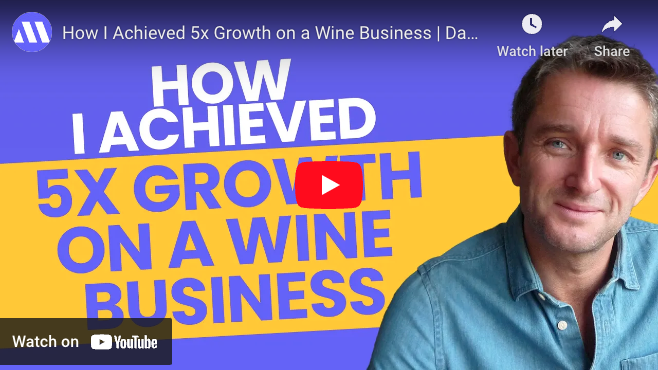
Happily, that was not the case for David Page.
In 2010 David took the plunge into wine when he bought Post and Trellis, a winery and vineyard management business in Silicon Valley.
The business was tiny. David had to get his hands dirty and learn on the job, fast.
Yet a decade later, David has quintupled the size of his business and shown that even very small businesses in much-maligned industries can grow to yield a cup that runneth over.
David Settles on The Bay Area
David Page was born and raised in England.
After graduating from university, he couldn’t see himself following most of his peers into the London finance scene.
“I didn’t dig the whole pinstripe formality.”
Growing up, David’s father ran his own small business representing French wine companies out of their home, and so the young David felt a strong affinity for commerce. With this in mind, he started off his career working in sales for a London software company.
It turned out to be an excellent opportunity for David, as he visited and learned about hundreds of different businesses while selling software to them. Soon enough, David was on his way to San Francisco Bay to help the company set up their U.S. operations.
He continued there and worked his way up in sales, all the while gaining further insight into the wide variety of businesses his company dealt with. After a few years, he decided to take time off to travel, a sequel to his gap year between high school and university.
David packed all his belongings into his car, stowed them away in a storage unit, and headed off for a year of travel around the world. The experience nudged David to understand his relationship with the Bay Area, his adopted home, and to decide he would return there for good.
Back in the Bay, the question now on David’s mind was: what would he do next?
David Decides to Buy a Business and Begins His Search
Though unsure of exactly what to do, David didn’t immediately launch a business search as soon as he got back to the U.S.
He initially returned to the software business, getting a job as VP of sales at a startup. But when the company pivoted towards agriculture, he realized he didn’t have anything in common with the farmers he’d be doing business with, so he left the role.
It was at this stage, in early 2010, that David began to seriously contemplate buying a business.
In his youth, David had watched his father try to buy another small business. The process stuck with him, and he had always known it was a possibility. So much so that the idea formed part of the savings habit that had given him the nest egg to travel.
“Not only did I want to pay for future trips, but also perhaps pay for a future business venture.”
With the breadth of experience from working with a variety of businesses across his sales career, David was confident he would be able to find and acquire a fulfilling business.
The Weird and the Wonderful of David’s Business Search
David set about his search following his gut.
More so than any specific material conditions, “I was really looking for income, interest, and independence. Those were my three watchwords.”
These criteria brought David in contact with many unique businesses, including a guitar accessories company, an online custom window screen company, a tutoring company, and a traveling circus.
“Each time, I kind of pulled back for a subsequently good reason, but I learnt an awful lot in doing it.”
At this stage, an old colleague was in acquisition talks himself and told David that the big companies looking into his business were really only interested in seeing one thing — the bank statements.
David took this observation seriously and began paying closer attention to the paper trail of potential businesses.
“I walked away from a couple companies where, you know, it looked really good on a P&L but didn’t look so good from another lens.”
He looked seriously at a lesbian dating company which, with its strong finances and his background in software, seemed like an excellent fit until he realized he wouldn’t be the best face for the business.
Next up was a dating site for farmers where, again, David struggled to relate.
After a year or so of searching, doubt began to creep in.
The search “was fascinating and fun, but it was starting to get a bit frustrating towards the end of it.”
David had the time to search, and he had the money to buy a business, but finding the right one for him was proving quite the challenge.
(Another story about a long search to buy a business: A Brutal Search Rewarded with Success After 3 Years)
David Finds the Right Business and Dives in Headfirst
David’s search was still plugging along a year later without much to show for it.
He had just had an LOI accepted by a medical staffing company he was interested in when he went to see an intriguing local wines and vines business that caught his eye. David went straight for the statements and found they didn’t quite line up with the P&L.
“I said to the owner of that company, ‘I like your business but it’s massively overpriced. Just for your interest, this is what I think it’s worth, and thank you very much for spending some time with me, but I’m gonna pursue my search elsewhere.’”
He proceeded with the medical staffing outfit and put the wine business mostly out of mind when three months later, the broker reached out again and said the owner was willing to restart discussions considering David’s valuation.
Despite its initial overvaluation, David saw remarkable potential in the business. It was a small winery with a vineyard management crew servicing the small, private vineyards of Silicon Valley’s wealthy landholders. David observed the “depth and breadth of wealth” of the potential client base and decided to buy the business, Post and Trellis, outright with a 100% cash purchase.
“Essentially, it was an upper six-figure deal, but it was still a pretty raw company. It had proven its market, it had proven its operations, it had proven its ability to make a profit, albeit a small one, but it was still very, very nascent in its market and operations.”
David Nurtures Vines and Grows His Business
Upon becoming the new owner of Post and Trellis, David was met with some surprises. The business was going to need more investment than he had thought and faced heightened levels of seasonality.
In addition, he would have to take on more roles in the company than he realized. Right away, he found himself delivering wine through supermarket back doors and interning during the harvest with the winemaker.
“It was basically me, a winemaker, and a vineyard guy. That was it. And so, I was the delivery driver, the harvest hand, basically everything year one. And so, I learned the business.”
(Another article about learning the business you buy: 6 Months in the Truck: Buying an Ice Delivery Biz)
David was unphased by the workload. He was working more and earning less than in his old software jobs, but that field had always been a means to an end rather than an end itself for David.
“A lot of people are cautioned against ‘buying a job.’ Well, of course you’re buying yourself a job! You’re buying yourself a job at any scale. This idea of a completely arm’s length or armchair business, where you’re not heavily involved, that’s fine way, way up the value chain, 50 mill plus. But below that, even if it’s a PE buyer, they’re making sure someone’s heavily involved.”
It was hectic, but David learned the ins and outs of his new business quickly and remained optimistic about its prospects.
“To me, it didn’t feel like that much of a risk because of the recurring revenues, because of the market opportunity for vineyard management, because of the fact that the wine was well received and clearly the winemaker knew what he was doing. And also, because I wasn’t taking on any debt.”
In his first year, David focused on bringing more vineyards under management, convincing new customers to install vineyards, and building out his team.
He hired an event manager to boost venue rental. The year before he came on board, the winery hosted 20 events; within 2-3 years, they were doing more than a hundred.
As the business grew, David hired his first vineyard manager.
“One good principle in general is, try and almost make yourself redundant.”
Yet as they continued to grow, Post and Trellis faced a problem not unique to the wine business but acute nonetheless. It was difficult to keep focused when they had so many diverse business lines: events; direct to consumer wine sales; wholesale; vineyard construction; and vineyard management.
“You can kind of go bust very quickly without focusing, in any business, but particularly within wine.”
Ultimately, David was able to overcome these difficulties by ensuring he had excellent people working in each area.
Post and Trellis Today and Looking to the Future
A decade later, David’s business is 5x larger in all respects. About 60% of their revenue is recurring from vineyard management, 20% is repeat from wine sales, and another 20% from reasonably reliable events.
The simple secrets to his success, he claims, are happy customers and happy employees. The two metrics are intertwined since crews that “are happy smiling, joking, and do a killer job” delight clients and generate for the business a tremendous amount of positive feedback and word of mouth.
While David notes that “in the booze business, no one is pissed off,” it takes more than that to cultivate an environment of abundant worker satisfaction.
“It’s about treating people with openness and respect and paying them as much as you can.”
David’s dedication to his team and his customers has paid off, and his success now offers him a great deal of flexibility.
“I can now decide, do I want to keep investing my time and capital in the business or do I want to put some eggs in some other baskets.”
After more than ten years, David is now launching a second search for a bolt-on company with between $500k and $2-3 million in SDE.
What sort of business he’ll buy next is uncertain, but looking back on the adventure of his first acquisition, one can be sure he’s developed a taste for more.

Will Smith hosts the podcast Acquiring Minds, interviewing entrepreneurs who buy businesses.