
Established Production of Tungsten-Trioxide

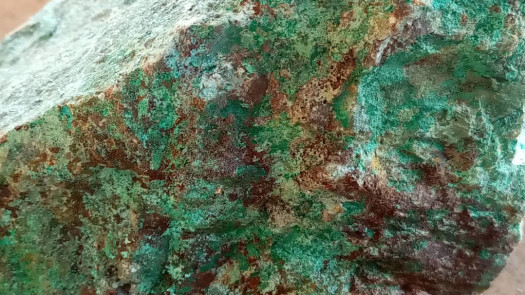
Established Production of Tungsten Trioxide and Oxidized gold Copper in the Samarkand region, Urgut district, Republic of Uzbekistan.
The geological structure of the site includes sediments of the Lower Devonian – (Madmon Formation) and lower – Middle Devonian with granodiorites of the Chashtepa intrusive. Intrusive formations are represented by porphyry-like biotite granodiorites, covered with limestones, shales, and Quaternary sediments. Ore bodies No. 1, 1a, 2, and 3 located at the site are in the process of assessment and a series of mineralization zones potentially promising for new ore bodies discovery of industrial scale have been identified.
The world’s reserves of tungsten are 3,200,000 tonnes; they are mostly located in China (1,800,000 t), Canada (290,000 t), Russia (160,000 t), Vietnam (95,000 t), and Bolivia. As of 2017, China, Vietnam, and Russia are the leading suppliers with 79,000, 7,200, and 3,100 tonnes, respectively. Canada ceased production in late 2015 due to the closure of its sole tungsten mine. Meanwhile, Vietnam had significantly increased its output in the 2010s, owing to the major optimization of its domestic refining operations, and overtook Russia and Bolivia.
Tungsten is mainly used in the production of hard materials based on tungsten carbide (WC), one of the hardest carbides. WC is an efficient electrical conductor, but W2C is less so. WC is used to make wear-resistant abrasives, and “carbide” cutting tools such as knives, drills, circular saws, dies, milling, and turning tools used by the metalworking, woodworking, mining, petroleum, and construction industries. Carbide tooling is actually a ceramic/metal composite, where metallic cobalt acts as a binding (matrix) material to hold the WC particles in place. This type of industrial use accounts for about 60% of current tungsten consumption.
The jewelry industry makes rings of sintered tungsten carbide, tungsten carbide/metal composites, and also metallic tungsten. WC/metal composite rings use nickel as the metal matrix in place of cobalt because it takes a higher luster when polished. Sometimes manufacturers or retailers refer to tungsten carbide as a metal, but it is a ceramic. Because of tungsten carbide’s hardness, rings made of this material are extremely abrasion resistant and will hold a burnished finish longer than rings made of metallic tungsten. Tungsten carbide rings are brittle, however, and may crack under a sharp blow.
Reserves overview:
– Tungsten trioxide (off-balance)
– 10 915.5 t. with an average grade of 0.67% of Gold
– (С1+С2) – 1.7 t at avg. grade – 1.4 g/t;
As per 01.01.2021
Geological and industrial type:
– Oxidized gold bismuth containing
– Copper-tungsten type
Enrichment technology
– Gravity method
– The cyanide method was used to extract gold
Financials (USD)
Asking Price $150,000,000
Additional Details
Minerals Other
Disclaimer: DealStream has not independently verified any of the information in this listing and makes no warranty as to its accuracy or completeness. This listing does not constitute an offer to sell, solicit or make an offer to buy an investment interest. Offers to sell, or the solicitation of offers to buy, any security can only be made through official offering documents, such as a subscription agreement and private placement memorandum. Read DealStream's Terms Of Use before responding to any listing. Learn how to stay safe in our marketplace.
Request Information
Want to learn more about this listing? Log in now. New to DealStream? Discover how artificial intelligence can help you find better deals! Sign up for a Free Account today and get your first Search Genius deal tomorrow.
Sign UpDealStream Awards & Reviews